A drawing with somewhere to go.
 3 min read
Start with what is there.
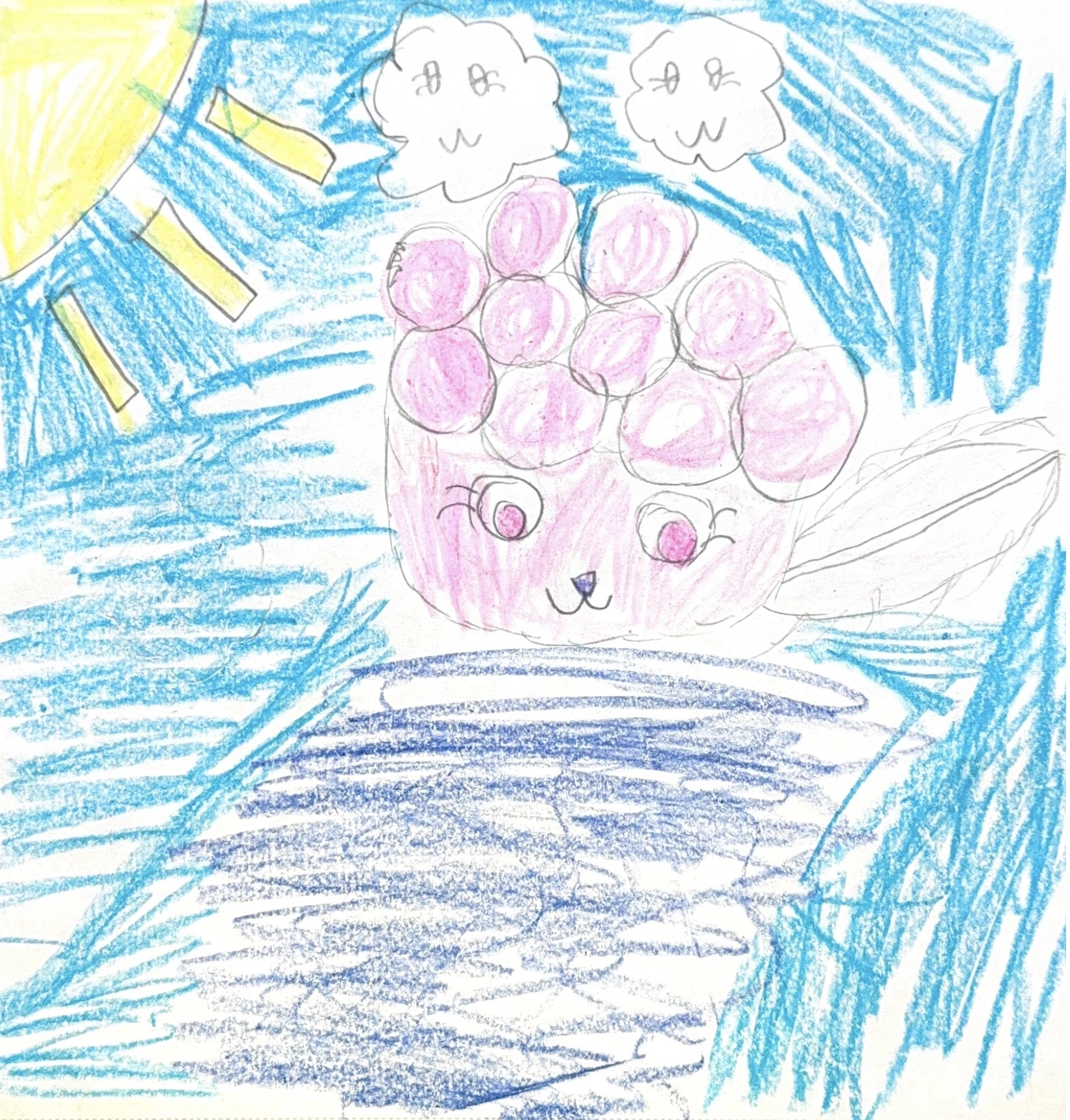
Pink loops surround a small smile. A yellow sun sits above them. Blue marks fill the space around the figure. In the drawing shown here, there is already plenty to notice before anyone asks what it is supposed to be.
An adult might see a creature, a flower or an excellent candidate for a tidier outline. The child may have something else in mind. You can leave that possibility open. Try pointing to one detail: “You made all these loops.” Then wait.
ZERO TO THREE’s guidance on early drawing suggests noticing the marks and inviting a child to talk about the picture, instead of concentrating on what it represents. [2]
Let the explanation belong to them.
“Tell me about this part” gives you somewhere to begin. If there is a name, let the child choose it. If there is a story, ask whether they would like you to write it down. Keep their words, including the strange ones.
There may be no explanation. Perhaps the blue crayon was simply good to use that day. You can enjoy looking without making the child produce a plot.
For very young children, ZERO TO THREE describes drawing and early writing as connected kinds of mark-making. Its advice includes taking seriously the words a child says they have written, even when the marks do not yet look like conventional writing. [2]
Keep the original in the picture.
In our drawing-to-story example, this drawing appears beside Squiggle, the character adapted from it. You can look between the two: the pink, the loops, the smile. The original stays visible.
That is the part of the demonstration we want to linger on. A new version should give you a reason to look back at the drawing. Ask what the child recognizes, what they would change, or whether they prefer the one they made.
You could keep both versions in a folder, or put the drawing beside whatever comes next. A model, a story, another drawing: there is no requirement to move beyond paper.
Leave the next page open.
NAEYC describes process art as open-ended and led by choices about making, rather than a predetermined result everyone must copy. It also notes that projects with a planned outcome can have value; this does not have to become another rule about the right way to make art. [1]
Here, the invitation is smaller. Put the crayons within reach. Maybe the character needs somewhere to sleep. Maybe the next page is full of blue again. Let the child decide whether to continue.
The NAEYC and ZERO TO THREE articles offer early-childhood guidance. They are useful context for how an adult joins in; they are not evidence that a piece of software improves creativity.
You do not have to turn every drawing into something else. Sometimes giving it somewhere to go means making space for it on the wall.
Before asking what the drawing could become, ask what the child wants you to notice. The next idea can wait.
Sources & further reading
- What Will We Make? Using Process Art to Spark Preschoolers’ Development · National Association for the Education of Young Children
- Learning to Write and Draw · ZERO TO THREE
Created with AI-assisted research and writing, with editorial and source checks. Reviewed for publication by the Storytailor owner. The lead shows the original drawing used in our demonstration.