Make the doorway. Leave the story open.
 2 min read
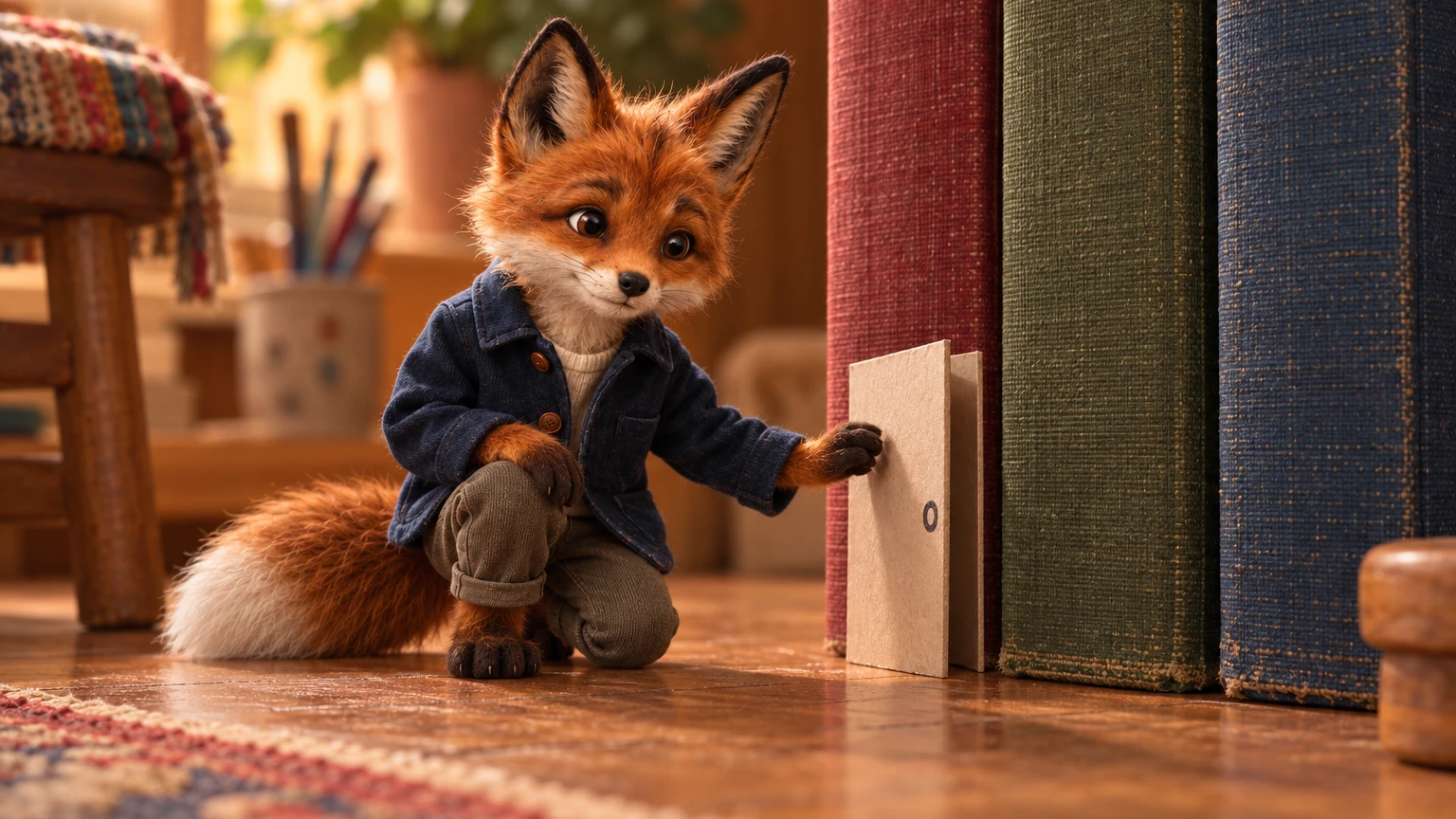
A door beside the books
Set a folded-paper doorway beside a stack of books. Its handle is a pencil mark. Who lives behind it is still undecided.
The adult’s contribution can be that small: make the entrance. Leave its inhabitant for the child to invent.
Make one fold
Take a small rectangle of paper or thin card and fold it in half like a greeting card. With the fold on the left, draw a door and a little handle on the front. The whole front panel will open; there is no need to cut out a separate door.
Stand it beside a stack of closed books, with the crease upright and the two halves slightly apart. If it won’t stay up, rest one edge against a book. Decorate it if you like. There is no miniature house to finish before you can begin.
The Eric Carle Museum of Picture Book Art’s bookmaking activity includes a paper doorway with a paper character tucked inside.[2] This freestanding doorway is our own variation, with the resident left undecided.
Ask who lives here
Set the doorway where you can both see it. Ask, “Who lives here?” and pause before offering an answer of your own.
If your child wants to continue, let a detail in their answer guide your next question. In an imagined exchange, “A moth who repairs umbrellas” might lead to “What has come in for mending today?” Ask one thing, then leave the next turn to them.
Let one answer be enough
The V&A’s household-object storytelling activity offers writing, drawing and imagining as ways to make a story.[1] A sketch or the sound of a knock can be your child’s answer here. It needn’t become a complete plot.
If no answer comes, you can put the card away. Or leave it beside the books, still a little ajar.
Offer a doorway and one question: “Who lives here?” Follow a detail if your child wants to continue. A single invented resident is enough.
Sources & further reading
- Design and make your own story · Victoria and Albert Museum
- Books with Surprises · The Eric Carle Museum of Picture Book Art
Created with AI-assisted research and writing, with editorial and source checks. Reviewed for publication by the Storytailor owner. The illustration is an imagined scene.