When a child feels alone during play
 4 min read
Start with the child’s version
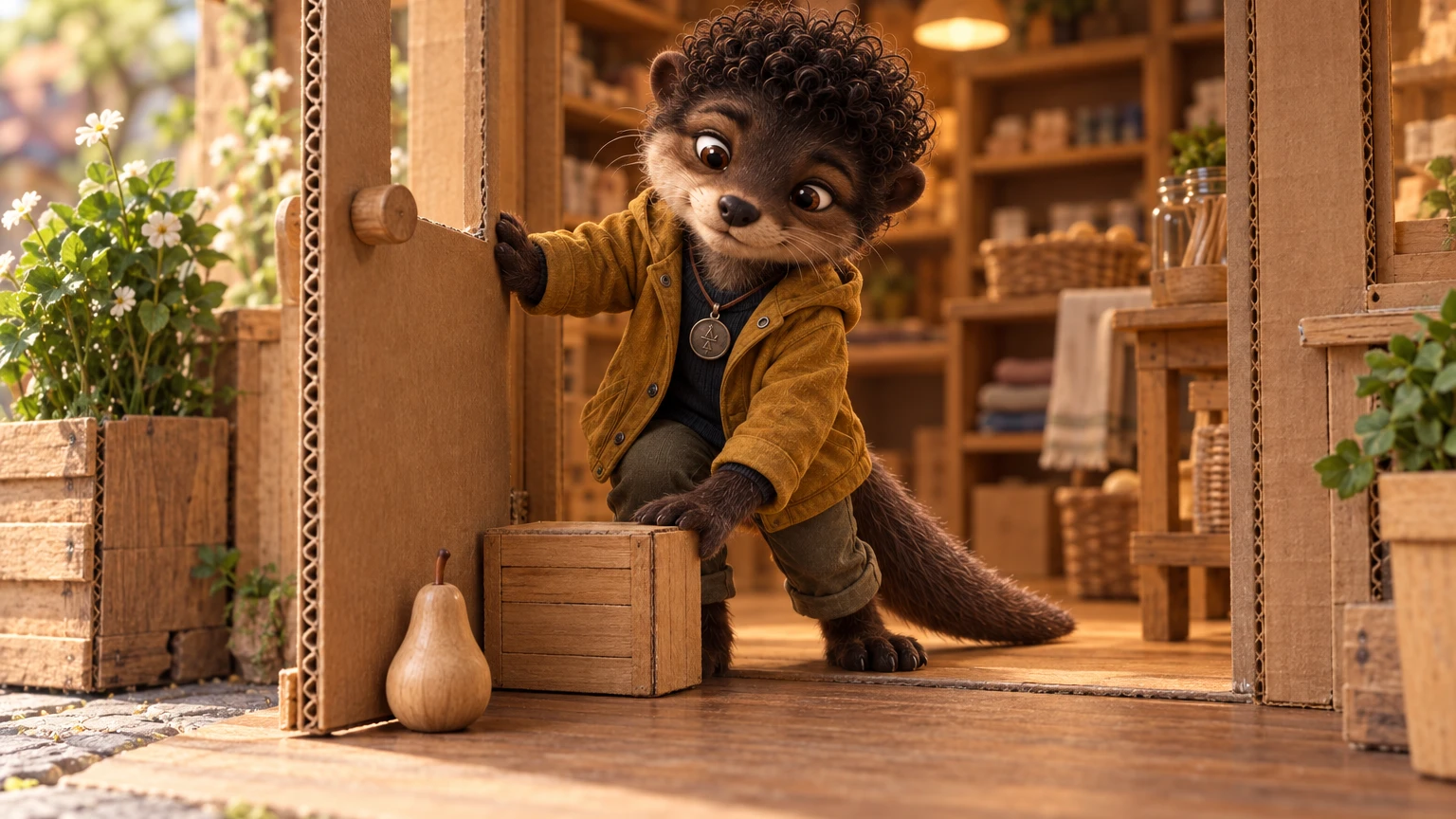
Imagine a child beside a pretend shop, turning a wooden pear over in one hand while other children arrange the shelves. Before finding the child a place behind the counter, ask whether they want to join.
Solitary and side-by-side play are recognized forms of early-childhood play.[1] Seeing a child play alone cannot establish whether they feel lonely; observation needs the child’s account alongside it.[2]
Ask what the child wants before reorganizing the play. Keep a satisfying game alone available. When the child wants company, share the work of making room.
Ask what company would help
When a child says, “Nobody will play with me,” ask about that particular experience. Understood’s guidance recommends open-ended questions and working out possible responses with the child.[3]
Try: “What was happening when you wanted to play?” Then, if the child wants to join, “Would you like some help?” Ask one question and give the answer some room.
If the child says, “I asked and they said no,” acknowledge that before proposing another activity: “You wanted to be part of their game, and they said no.” Resist rushing to “I’m sure they didn’t mean it.” You do not yet know what happened.
For a child who wants to continue alone, you might say, “You can keep building. I’ll be over here if you want company.”
Check whether the game makes room
Before rehearsing a better joining-in sentence, inspect the activity. Is there an actual role available? Can the child reach the materials? Does participation depend on speaking quickly or already knowing an unspoken rule?
Head Start recommends accessible play spaces and materials, along with communication options that can include home languages, signs and communication devices.[4]
For the imagined shop, try placing the delivery basket within everyone’s reach and allowing an order to be spoken, pointed to or shown with an object. Ask the children which jobs the shop needs, then check that a newcomer would have a meaningful part.
Do not leave all the work to the child waiting outside.
Make one opening in the game
Head Start guidance suggests modeling participation or offering a role to help children enter pretend play.[4] Make the invitation specific enough for everyone to understand.
With the child’s agreement, ask the shopkeepers, “Would a delivery person fit your game?” If that role is welcome, offer the child a choice: “Would you like to deliver the pear, or shall we think of something else?”
If everyone wants to try, offer to stay for the first delivery. Then ask whether to step back. Afterward, find out how it felt. Avoid declaring that the child has found friends or that the problem is solved.
If the invitation is declined, acknowledge the disappointment. Offer another possibility without requiring an immediate answer: “Would you like me to play with you for a while?” Adult companionship is among the options suggested by Understood.[3]
Offer make-believe without decoding it
NAEYC practitioner guidance describes using story characters and pretend situations to discuss feelings and possible responses.[5] If the child wants to continue through play, offer an invented question: “Someone wants to visit this shop but doesn’t know how to start. What could the shopkeeper do?”
Follow the child’s version, including a change of subject. Keep the fictional answer inside the fiction unless the child chooses to connect it to something personal. Do not assign a hidden meaning to a closed shop door, an empty basket or a character who wants to go home.
When the difficulty keeps returning
Recurring difficulties are a reason to compare observations with the child’s educator and revisit what has been tried.[3][2]
You might ask: “My child says there wasn’t a way into the playground game. What have you noticed when children try to join?” Ask about the welcome from peers and the support adults offered. Agree on one adjustment to try, then return to the child’s account of what happened.
Keep the goal specific: an available role or a willing play partner. Avoid setting a quota of friends or group-play minutes.
A four-question reflection card
Use these four questions to choose a response and revisit it. This original editorial card is not a diagnostic checklist and makes no promise of reducing loneliness.
What happened? Record the particular moment and the child’s words. Keep your interpretation separate.
What company did the child want? Ask whether the wish was for a particular person, a place in a game, an adult nearby or time alone.
What could we offer or change? Choose one invitation or adjustment with the child. Include something the adults or group could do.
What happened next? After the child has had a chance to try it, ask: “How was that for you? Would you want to do it again?”
Let the child’s answer change what you do next.
Ask what company the child wants and share responsibility for making room. Choose one invitation or adjustment together, then ask how it felt. Keep welcome solitude available.
Sources & further reading
- Principles of Child Development and Learning and Implications That Inform Practice · National Association for the Education of Young Children
- Loneliness in Young Children. ERIC Digest. · ERIC Clearinghouse on Elementary and Early Childhood Education
- What to do when kids say “no one will play with me” · Understood
- It’s Make-believable · Office of Head Start, Administration for Children and Families, U.S. Department of Health and Human Services
- Teaching Emotional Intelligence in Early Childhood · Young Children, National Association for the Education of Young Children
Created with AI-assisted research and writing, with editorial and source checks. Reviewed for publication by the Storytailor owner. The illustration is an imagined scene.